







Guide your jet through the corridor, dodge incoming barriers, stay centered when possible, and survive for as long as you can without crashing.
Jet Rush
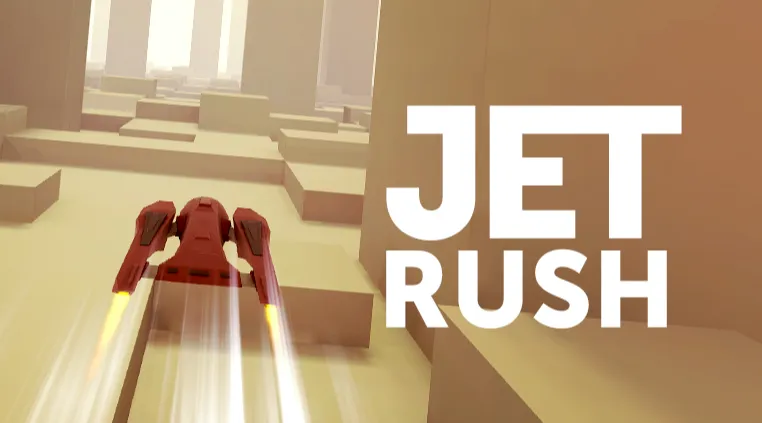
The first few seconds almost feel manageable. The tunnel is bright, the path is readable, and the ship glides forward with just enough stability to make you think this will be simple. Then the walls start closing in. A barrier appears slightly off-center, then another immediately after it, and suddenly you’re not playing casually anymore — you’re threading gaps on instinct. What makes Jet Rush work is the way it builds pressure without needing anything complicated. It keeps asking a very direct question: can you stay calm while the world speeds up? Some obstacles are wide and obvious, forcing a clean lane change. Others arrive in awkward patterns that punish overcorrection more than hesitation. After a few failed runs, you begin noticing the small things: how far ahead you should read the track, how tiny movements are safer than dramatic swerves, how the craft feels best when you stop fighting it. That’s when the game becomes addictive. A section that looked impossible starts feeling familiar. The tunnel stops being chaos and starts becoming rhythm. And when you survive a stretch that used to end your run instantly, it feels less like luck and more like your reflexes finally caught up.
At its core, the gameplay revolves around lane awareness, movement restraint, and visual anticipation. The controls are immediate, which means mistakes feel fair and recoveries feel satisfying. Jet Rush does not overload the player with extra systems; instead, it gets depth from speed escalation and obstacle sequencing. The real skill comes from reading danger early and making the smallest correct movement rather than the biggest possible reaction.
From a pacing perspective, the challenge curve is what keeps runs engaging. Early sections help players build confidence with readable spacing, but later segments compress decision time and force cleaner execution. Improvement is easy to feel because the game constantly turns familiar obstacles into tougher combinations, pushing players to refine attention and timing rather than memorize one pattern and coast through it.
Jet Rush – Flight Strategy Guide
Tunnel speed, sharp dodges, and pure focus — Jet Rush gets intense fast. Readable tunnel hazards help players improve through practice instead of random luck.
Jet Rush throws players into a high-speed arcade flight challenge built around reflexes, obstacle reading, and constant forward pressure. Guide your craft through narrow futuristic corridors, react instantly to shifting barriers, and keep control as the pace grows more demanding. For players searching for fast flying games, tunnel dodging action, and skill-based survival runs, this experience delivers a clean loop of speed, precision, and repeatable improvement.
✈️ Tunnel Reflex Breakdown
Jet Rush turns simple left-right movement into a tense survival challenge by constantly tightening the space around the player.
Short runs are easy to restart, which makes improvement feel immediate instead of frustrating.
🎯 Core Flight Systems
✈️ High-Speed Tunnel Dodging
Fast forward motion and narrow gaps turn simple movement into an intense survival test.
🛡️ Readable Obstacle Pressure
Clear barrier layouts reward anticipation, timing, and smarter movement choices.
🎮 Immediate Control Response
Precise handling keeps the challenge focused on reflexes, concentration, and clean dodges.
✈️ Enter The Tunnel
🎮 Jet Flight Controls
Arrow Keys / WASD: Move
Touch / Drag: Steer the jet on supported devices
ESC: Pause menu
💡 Survival Tips
1. Look ahead instead of staring only at the nearest obstacle
2. Make small movements whenever possible to avoid overcorrecting
3. Stay calm when the tunnel starts speeding up
4. Return to a safe central position after a dodge if the path allows it
5. Treat repeated barrier patterns like rhythms you can learn
❌ Common Flying Errors
1. Reacting too late to the next obstacle in line
2. Swerving too hard and creating a second mistake immediately after the first
3. Focusing on speed pressure instead of actual tunnel spacing
4. Panicking after a near miss and losing control
5. Forgetting that smaller adjustments are often safer than dramatic turns
📊 Speed Progression
Early stretches introduce clean gaps and straightforward barrier spacing. Mid-run sections reduce decision time and combine obstacle shapes in less forgiving patterns. Later survival depends on sharper anticipation, steadier control, and faster recognition of safe lanes.
🧠 Flight Strategy
Play with restraint. Read the corridor early, move only as much as necessary, and avoid turning one dodge into a chain of corrections. Longer runs usually come from consistency, not aggression.
🎉 Why It Feels Rewarding
Jet Rush makes improvement easy to feel. The tunnel gets faster, the pressure rises, and every extra second you survive feels tied directly to better focus and cleaner reflexes.
👥 Recommended Players
Perfect for fans of arcade flying games, reflex-based dodging challenges, and players who enjoy short runs built around skill, concentration, and score improvement.
💻 System Compatibility
Playable on modern web browsers across desktop, tablet, and mobile devices with smooth performance, responsive controls, and no complicated installation required.
❓ Common Questions
Q1: Is Jet Rush free to play?
Yes, the game is completely free and starts quickly without a complicated setup.
Q2: Can I play on mobile devices?
Yes, it runs smoothly on smartphones, tablets, and desktop systems.
Q3: Does the speed increase during a run?
Yes, the challenge rises as the pace grows faster and obstacle spacing becomes harder to manage.
Q4: What matters most in Jet Rush?
Reading the tunnel early and making controlled movements matters more than reacting with big last-second swerves.
Q5: Is the game easy to learn?
The controls are simple right away, but surviving longer takes practice, focus, and better obstacle recognition.
Q6: What makes the gameplay satisfying?
Fast restarts, clean controls, and visible improvement make each better run feel earned rather than accidental.
▶ PLAY NOW